


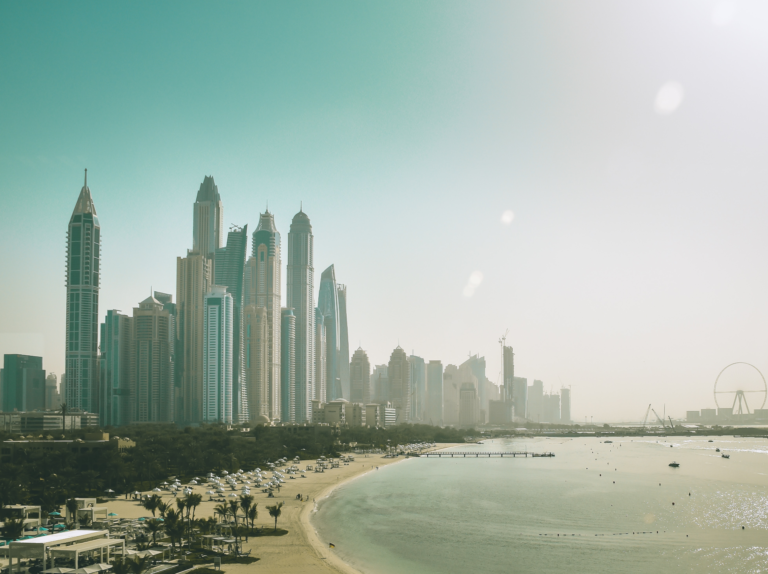

The fourth quarter marked a convincing end to a very strong year overall for the real estate market in Dubai. Despite geopolitical uncertainties and restrictive monetary policy in many parts of the world, the market remained robust. The months of October to December were characterized by high transaction activity, stable demand and a continued, albeit more moderate, price trend.
Real estate sales worth over AED 140 billion were registered in the fourth quarter. This means that the transaction volume was around 10-15 percent higher than in the same quarter of the previous year. The number of transactions was at a similarly high level as in Q3, indicating an overall healthy balance between supply and demand. The even level of activity across all three months underlines the stability at the end of the year.
Both investors and owner-occupiers remained active. International buyers continued to account for a significant proportion of demand, particularly from Europe, Asia and the Middle East. The proportion of foreign investors across the market was over 40%. At the same time, however, this dependency makes the market more sensitive to external factors such as exchange rate developments or geopolitical changes.
The off-plan market remained a key driver, accounting for around 55-60% of all transactions. Developers responded with new project launches and flexible payment plans. However, this dynamic increases the risk of simultaneous project completions in the coming years, which can lead to local supply pressure. Accordingly, it is already apparent that secondary market prices can no longer be easily achieved in all locations and buyers are acting more selectively.
The market for ready-to-occupy properties was stable, particularly in established locations with good infrastructure. High-quality apartments, townhouses and villas remained in demand, while standardized products came under greater competitive pressure.
The year-on-year price trend continued at an average of 6-10%, in some cases higher in the premium segment. At the same time, price sensitivity increased, indicating that the market is becoming increasingly mature. Not every location and every project benefited equally from further increases in value.
Regionally, Business Bay, Jumeirah Village Circle and Dubai South were among the most active markets. Business Bay benefited from its proximity to Downtown and the demand for high-quality apartments. JVC remained strong in terms of volume with an attractive price-performance ratio, while Dubai South recorded rising demand, particularly for townhouses and villas.
The rental market also developed positively overall. Rents rose by around 5-8% year-on-year. At the same time, the first signs of differentiation are becoming apparent: stagnating rents for standard apartments and increasing competition for new handovers are raising the requirements in terms of fittings, quality and active management. Attractive payment plans also make it easier for buyers with lower equity to enter the market, which supports short-term demand but increases sensitivity to market changes in the long term.
Conclusion:
The fourth quarter confirmed the strength and resilience of the Dubai real estate market. At the same time, the market is entering a phase of increasing differentiation. For 2026, market observers expect continued positive but more selective development with a focus on location, quality, developer strength and sustainable concepts. Dubai therefore remains a dynamic but challenging real estate market.